Monday, 9 June 2014

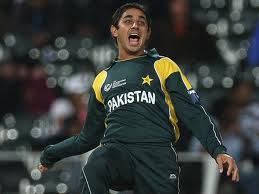
Syed Ajmal

Syed Ajmal Biography

source(google.com.pk)
Saeed Ajmal is a Pakistani cricketer. He is a right-arm off-spin bowler who also uses the Doosra to good effect.

Early life and domestic cricket
Ajmal has played for Faisalabad since his debut in 1995 at the age of 18, also representing Khan Research Laboratories and occasionally Islamabad. After a successful season in 2007–08 for Khan Research Laboratories, he was named in Pakistan's squad for the 2008 Asia Cup.

In a domestic match Faisalabad vs Rawalpindi , the Pindi coach told ajmal that camera footages could be sent to board . Thus Saeed did not bowl any doosra , as Pindi hampered to a win.

International career
He made his debut against India, taking the wicket of Yusuf Pathan in an eight-wicket before taking two wickets in a ten-wicket victory over Bangladesh, although the team had no chance of progressing to the competition's final.

From there he has had a rapid rise in the team in just over a full year. He had an excellent time at the 2009 ICC World Twenty20, bowling at an economical rate and regularly taking wickets along with his spin partner Shahid Afridi. He was then picked for the Sri Lankan series in Sri Lanka where he had made solid performances in the Test matches, being picked ahead of Danish Kaneria in two of the matches.

Ajmal's good form continued in the 2010 ICC World Twenty20 as he was Pakistan's leading wicket taker. However despite his good form he was known for conceding three sixes to Michael Hussey in what has been hailed as the most thrilling Twenty20 match of all time as Australia were in trouble and Ajmal was the unfortunate bowler who bowled that final over.

Shortly after this the Pakistan team began there long tour of England and in the two Test matches played against Australia spinner Danish Kaneria was selected ahead of him. In the 1st Test against England Kaneria was selected ahead of Ajmal as well. However after poor bowling by Kaneria, Ajmal was selected and he took his career best bowling figures of 5/82 Despite Pakistan restricting England the team suffered a top order collapse and Zulqarnain Haider scored 88 and Ajmal also showed that he has the abiltiy to bat when he scored 50 runs these two men helped Pakistan lead a revival after being bowled out for 72 on the first day. Along with Zulqarnain Haider they together continued to frustrate the England and when it was stumps on day three Pakistan had a 112-run lead however Zulqarnain Haider and Ajmal were out on 88 and 50 respectively and so Pakistan were left on the final wicket with Mohammad Asif and Umar Gul. During the series against England Pakistan became englufed in a spot fixing scandal after the fourth test and in a later secret interview it was unveiled by alleged fixer Mazhar Majeed that Ajmal, Abdul Razzaq, Younis Khan and Shahid Afridi were difficult to bribe. He stated that Ajmal was too religious to get involved into fixing.

Skills in the art of spin
"With HawkEye coming in, left-arm spinners slide the ball on for lbws. Offspinners get a lot of lbws from round the wicket, so you [batsman] have to work really hard, and a bloke who's got a doosra you have to work extra special hard.
—England batsman Kevin Pietersen

Ajmal is known as an excellent spinner of the ball and strong especially against left-handers. He has a well disguised doosra and keeps it as a mystery while he bowls. His technique is noted for causing more spin than speed as that is what Ajmal prefers Which in a sense is similar to Danish Kaneria who likes to bowl slow spin but Kaneria has a different case as when he picks up more speed he tends to loose the spin of the ball. When Pakistan started there tour of England in 2010 former Pakistani off-spinner and the founder of the doosra, Saqlain Mushtaq had a coaching session with Ajmal to advise him on his spin techniques Ajmal's spin technique came in special hand against England in 2010 has he took his first 5-wicket haul to help restrict England. Kevin Pietersen congratulated Ajmal on the amount of spin he achieved. Ajmal though started his international cricket in limited-overs cricket and was one of the early off-spinners to possess the skills of the doosra. A stat shows that out of Ajmal's 38 wickets in Twenty20 cricket 13 of them have been stumped the most for any bowler in the game. Also it was of Ajmal's off-break that Zulqarnain Haider collected his maiden international stumping.

In 2009, University of Western Australia test indicated that his arm is 8.5° tilted due to accident and 23.5° bowling action is allowed for him. Saeed Ajmal also said in an interview that he had learned the doosra on his own and that the rated Saqlain Mushtaq as the best off-spinner ever and rated Muttiah Muralitharan in second-place. He also stated that Muralitharan was a very nice and down to earth person. Ajmal said that he planned to introduce a new delivery at the 2011 Cricket World Cup


Syed Ajmal

Syed Ajmal

Syed Ajmal

Syed Ajmal

Syed Ajmal

Syed Ajmal

Syed Ajmal

Syed Ajmal

Syed Ajmal

Syed Ajmal

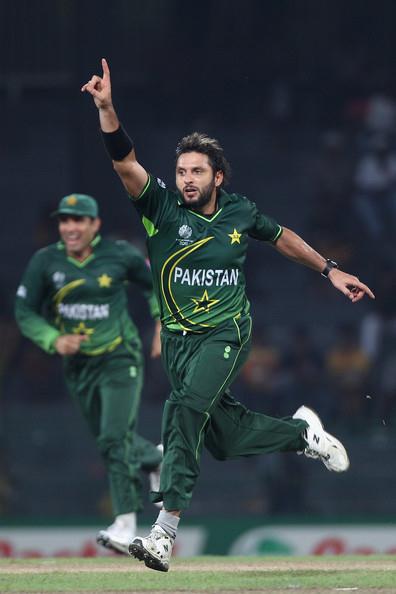
Shahid Afridi

Shahid Afridi biography

source(google.com.pk)
Sahibzada Mohammad Shahid Khan Afridi born in Khyber Agency of the Federally Administered Tribal Areas, Pakistan), popularly known as Shahid Afridi is a Pakistani cricketer. Between 1996 and 2011, Afridi played 27 Tests, 325 One Day Internationals, and 43 Twenty20 Internationals (T20Is) for the Pakistani national team. He made his ODI debut on 2 October 1996 against Kenya and his Test debut on 22 October 1998 against Australia.

He is known for his aggressive batting style, and holds the record for the fastest ODI century which he made in his first international innings, as well as scoring 32 runs in a single over, the second highest scoring over ever in an ODI. He also holds the distinction of having hit the most number of sixes in the history of ODI cricket. Afridi considers himself a better bowler than batsman, and has taken 48 Test wickets and over 300 in ODIs. Currently Afridi is the leading wicket taker in the Twenty20 format taking 53 wickets from 43 matches.

In June 2009 Afridi took over the Twenty20 captaincy from Younus Khan, and was later appointed ODI captain for the 2010 Asia Cup. In his first match as ODI captain against Sri Lanka he scored a century however Pakistan still lost by 16 runs. He then also took over the Test captaincy but resigned after one match in charge citing lack of form and ability to play Test cricket; at the same time he announced his retirement from Tests. He retained the captaincy in limited-overs form of the game and led the team in the 2011 World Cup. Amongst his highlights while captaining Pakistan include leading the team to their first ODI series win in two-years. In May 2011, having led Pakistan in 34 ODIs Afridi was replaced as captain. Later that month he announced his conditional retirement from international cricket in protest against his treatment by the Pakistan Cricket Board (PCB).

Afridi is from the Afridi tribe of the Khyber Agency in the Federally Administered Tribal Areas and hails from a Pashtun family. He is married and has two daughters, Aqsa and Ansha.

In October 1996 at the age of sixteen Afridi was drafted into the ODI team during the four-nation Sameer Cup 1996–97 as a leg spinner as a replacement for the injured Mushtaq Ahmed. He made his debut on 2 October against Kenya, however he didn't bat and went wicketless. In the next match against Sri Lanka, Afridi batted at number three in the role of a pinch-hitter. In his first international innings, Afridi broke the record for fastest century in ODI cricket, reaching his hundred from 37 balls. The eleven sixes he struck also equalled the record for most in an ODI innings. Aged 16 years and 217 days, Afridi became the youngest player to score an ODI century. Pakistan posted a total of 371, at the time the second-highest in ODIs, and won by 82 runs; Afridi was named man of the match.

Two years after appearing on the international scene, Afridi made his Test debut in the third game of a three-match series against Australia on 22 October 1998. By this point he had already played 66 ODIs, at the time a record before playing Tests. He opened the batting, making scores of 10 and 6, and took five wickets in the first innings. He played his second Test the following January during Pakistan's tour of India; it was the first Test between the two countries since 1990. Again opening the batting, Afridi scored his maiden Test century, scoring 141 runs from 191 balls. In the same match he also claimed three wickets for 54 runs. After winning the first match by 12 runs, Pakistan lost the second to draw the series.

In 2001, Afridi signed a contract to represent Leicestershire. In five first-class matches he scored 295 runs at an average of 42.14, including a highest score of 164, and took 11 wickets at an average of 46.45; Afridi also played 11 one day matches for the club, scoring 481 runs at an average of 40.08 and taking 18 wickets at 24.04. His highest score of 95 came from 58 balls in a semi-final of the C&G Trophy to help Leicestershire beat Lancashire by seven wickets.Derbyshire County Cricket Club signed Afridi to play for them in the first two months of the 2003 English cricket season. In June 2004 Afridi signed with English county side Kent to play for them in three Twenty20 matches and one Totesport League match.

Afridi made his presence felt in the third Test against India in March 2005, scoring a quick-fire second-innings half-century and taking five wickets in the match (including Tendulkar twice) to help Pakistan to win the game and register a series draw. In April Afridi struck what at the time was the equal second-fastest century in ODIs; he reached 100 off 45 deliveries against India, sharing the record with West Indian Brian Lara. Afridi was more consistent with his batting and bowling throughout 2005, starting with the tours of India and West Indies and through to the England tour. The Pakistani coach Bob Woolmer helped Afridi to reach a fuller potential by improving his shot selection and giving him free rein over his batting attitude.

On 21 November 2005, Shahid Afridi was banned for a Test match and two ODIs for deliberately damaging the pitch in the second match of the three-Test series against England. TV cameras pictured him scraping his boots on the pitch scuffing the surface when play was held up after a gas canister exploded. Afridi later pleaded guilty to a level three breach of the ICC code of conduct relating to the spirit of the game. Inquiries were made and Afridi's antics came into view. He was investigated and banned after the day's play, along with receiving a huge amount of criticism from the cricketing world for bringing the game into disrepute. Match referee Roshan Mahanama said: "This ban should serve as a message to players that this type of behaviour is not allowed." On this Afridi accepted his fault and said that a "senior player like me should set good examples to others because they see us to learn." His behaviour was also condemned by the Pakistan Cricket Board.

On 12 April 2006, Afridi announced a temporary retirement from Test cricket so that he could concentrate on ODIs, with a particular focus on the 2007 World Cup, and to spend more time with his family. He said he would consider reversing his decision after the World Cup. Afridi had played ten Tests since being recalled to the side in January 2005, averaging 47.44 with the bat including four centuries. However, on 27 April he reversed his decision, saying that "[Woolmer] told me that I am one of the main players in the team and squad and that Pakistan really needed me". Before Pakistan toured England in July to September, Afridi played for Ireland as an overseas player in the C&G Trophy. In six matches, he scored 128 runs and took seven wickets. England won the four-match Test series 3–0; Afridi played two matches, scoring 49 runs and took three wickets. It was the last Test cricket Afridi played until 2010.

Afridi was charged on 8 February 2007 of bringing the game into disrepute after he was seen on camera thrusting his bat at a spectator who swore at him on his way up the steps after being dismissed. Afridi was given a four-game ODI suspension, the minimum possible ban for such an offence, meaning that he would miss Pakistan's first two 2007 World Cup matches. The PCB and Afridi chose not to appeal the ban, despite feeling that the punishment was excessively harsh.

In the 2007 World Twenty20, he performed poorly with the bat but brilliantly with the ball, earning the Man of the Series award, though he failed to take a wicket in the final and was out for a golden duck.But in the next ICC Twenty20 World Cup, held in 2009 Afridi performed brilliantly in the series scoring 50 runs in the semi-final and 54 in the final and leading his team to victory.

On 30 May Afridi announced his conditional retirement from international cricket in protest against his treatment by the PCB. The condition on his return was that the board be replaced. The PCB suspended Afridi's central contract, fined him 4.5 million rupees ($52,300), and revoked his no-objection certificate (NOC) which allowed Afridi to play for Hampshire. Afridi filed a petition with the Sindh High Court to overturn the sanctions. On June 15, Afridi withdrew his petition after an out of court settlement and the PCB reinstated his NOC.

Shahid Afridi

Shahid Afridi

Shahid Afridi

Shahid Afridi

Shahid Afridi

Shahid Afridi


Shahid Afridi 

Shahid Afridi 
Shahid Afridi 
Shahid Afridi 
Shahid Afridi 

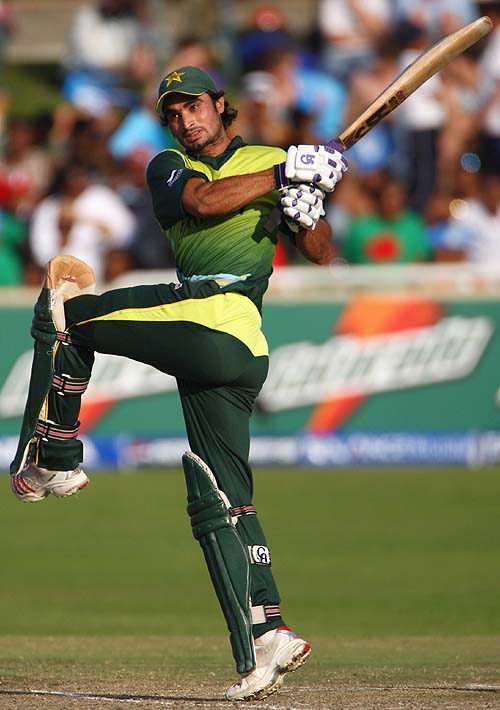
Imran Nazir

Imran Nazir Biography 

source(google.com.pk)I
Imran Nazir is a Pakistani right handed batsman in cricket who represented the Pakistan national cricket team in Test cricket, One Day International and Twenty20 cricket matches.
Career
Nazir made his debut in Test cricket on March 1999, against Sri Lanka at Lahore in Pakistan and a few days later, he made his One Day International debut against the same opposition at Visakhapatnam in India. He played in 8 Test matches between 1999–2002 and secured a spot in the Pakistan squad since 2002. He also played in One Day International arena, but he could never cement his place in the squad. The emergence of several Pakistan opening batsmen such as Mohammad Hafeez, Yasir Hameed, Taufeeq Umar and Salman Butt kept him out of the national side. However he displayed excellent cricketing performances in First class cricket.
Nazir made his return to the national team in the second One Day International against South Africa in February 2007 during Pakistan's tour of South Africa. He impressed the Pakistan national selectors with his innings of 57 runs from just 39 deliveries, though he struggled to score runs during the rest of the tournament.
Nazir was named in Pakistan's squad for the 2007 World Cup. He scored 160 runs against Zimbabwe in Pakistan's last match during the 2007 Cricket World Cup, after being knocked out by Ireland.
It was the second highest score by a Pakistani batsman and the eighth highest score by any batsman in World Cup history and his 8 sixes equaled the World Cup record of Australian batsman, Ricky Ponting. It was also the highest runs he scored in List A cricket. He now remains a regular member of Pakistan's Twenty20 squads.
In 2008, Nazir signed for the Indian Cricket League and played for the Lahore Badshahs. He scored 111 runs not out, off just 44 deliveries, against the Hyderabad Heroes in the third of the best of three finals of the tournament and helped his team to victory. After signing up for the Indian Cricket League, his chances of ever playing again for Pakistan looked slim. However, on 2 February 2009, a Pakistani court suspended the ban on Indian Cricket League players, which paved the way for Nazir to make a return to the One Day International and Twenty20 squad during their tour of Sri Lanka in August 2009. He was given another chance against New Zealand int two T20I's held in Dubai which Pakistan won 2-0. Next time, he was given a chance against Australia in only T20I in Australia but could not bat much. He showed the same form against England in February 2010 in two T2OI's and was consequently dropped from the Pakistani side. Since then, he has played two National T20 cups and shown really bad form. He was selected for the Hong Kong Sixes tournament 2010 in Hong Kong as a member of Pakistani squad. There again, he showed very bad form but worst of all, in the final which was inevitably in Pakistan's favor was lost due Imran Nazir's bowling. 46 was required from the last 8-ball over but Imran Nazir gave away 48 runs in 7 balls.
In Twenty20 games he has an extraordinary bowling average of 1.00 and in his 8 deliveries he has 3 wickets a strike rate of less than 3. He has also played for Dhaka Dynamites in Bangladesh's NCL T20 Bangladesh.
Achievement
Test cricket centuriesHe scored 131 runs against the West Indies at Bridgetown in the Caribbean on 18 May 2000.He scored 127 runs against New Zealand at Lahore in Pakistan on 1 May 2002.
One Day International centuriesHe scored 160 runs against Zimbabwe at Kingston Park in West Indies on 21 March 2007He scored 105 runs not out against Zimbabwe at National Cricket Stadium in Morocco on 15 April 2000 and became the second youngest batsman to score a century in a One Day International match

Imran Nazir

Imran Nazir

Imran Nazir

Imran Nazir

Imran Nazir

Imran Nazir

Imran Nazir

Imran Nazir

Imran Nazir

Imran Nazir

Imran Nazir

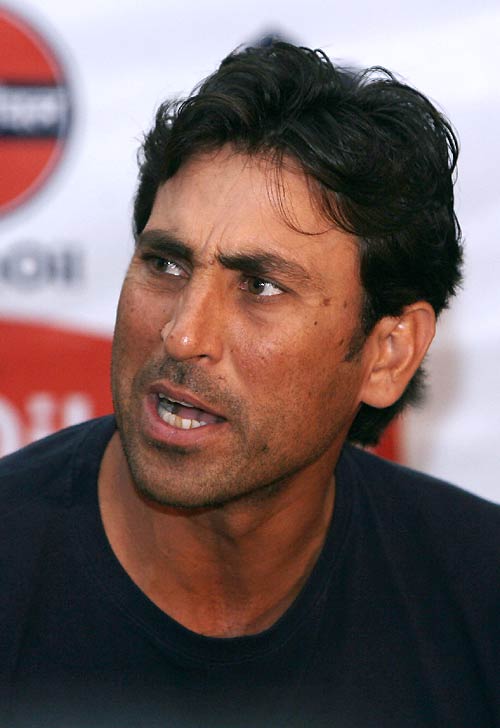
Younus Khan

Younus Khan Biography 

source(google.com.pk)

Mohammad Younus Khan is a Pakistani cricketer and former captain of the Pakistan national cricket team. Younus' name is often spelled Younis Khan, but he has been quoted as saying, "My name is Younus Khan. I tell people that everywhere, but they don’t listen." He is only the third Pakistani player to score 300 or more runs in an innings.
On March 10, 2010, Younus, along with another player, Mohammad Yousuf were axed by the Pakistan Cricket Board from playing for Pakistan in any format for an indefinite period, following an inquiry report which suggested that both the player were involved in breaches of discipline by inciting divisions within the team. The ban was overturned three months later.
Career
International career
Younus Khan made his international debut in an ODI against Sri Lanka at Karachi in February 2000, and has since played over 150 ODIs for Pakistan. He has also played in over 50 Test matches. Younus was one of the few batsmen who retained his place in the team after Pakistan's disastrous World Cup campaign in 2003, but lost it soon after due to a string of poor scores in the home series against Bangladesh and South Africa. He came back for the one-day series against India, but failed to cement a place in the Test side.
It was his return to the side in October 2004, at the pivotal one-down, against Sri Lanka in Karachi that laid the groundwork for his emergence as a force in Pakistan cricket. He was the top run-getter in the disastrous 3-0 whitewash in Australia immediately after and on the tour of India, for which Younus was elevated to vice-captain, he blossomed. After a horror start to the series he came back strongly, capping things off with 267 in the final Test. It was his highest Test score and came off 504 balls in the first innings, to set up a series levelling victory in Bangalore.
As well as being an accomplished batsman, Younus is also a skilled slip fielder and a very occasional leg-spin bowler. He has performed particularly well outside Pakistan, including on tours of Australia, India, England and Sri Lanka. In the six Tests he has played against India, Younus averages an exceptional 106, the highest average against India by a Pakistani. Apart from his 267 at Bangalore, Younus also made 147 at Kolkata in 2005 and a pair of centuries during India's trip to Pakistan in 2006. More importantly, the tour to India also showcased his potential as a future captain of Pakistan and his energetic and astute leadership has impressed many people. Also in 2006, Younus made a century in the third Test against England at Headingley. On 22 January 2007, he scored a matchwinning 67 not out in the 4th innings to guide Pakistan to victory over South Africa in Port Elizabeth. The five wicket win levelled the series at 1-1.
In 2005, he was one of the 15 nominees for the ICC Test Player of the Year. He is the second fastest Pakistani in terms of innings to reach 4000 Test runs, behind Javed Miandad. Younus reached the milestone in 87 innings, just one more than Sachin Tendulkar took.
Younus Khan topped the ICC's Test Batting Rankings in February 2009 after an acclaimed innings of 313 in his first test as captain, in the process of helping save the match for Pakistan. His ranking score of 880 is the third highest achieved by a Pakistani batsmen after Mohammad Yousuf (933), Javed Miandad (885) and just ahead of Inzamam-ul-Haq (870).
Captaincy situation
He first led Pakistan against the West Indies in 2005. In September 2006, he was offered the position of captain for the course of the 2006 ICC Champions Trophy, following the suspension of Inzamam ul Haq. He turned down the offer, stating he did not want to be a "dummy captain". However, on the morning of October 7, 2006 the Pakistan Cricket Board announced that Khan would lead his team in the tournament. Following the resignation of Inzamam after the side's exit from the 2007 Cricket World Cup, Khan was offered the captaincy on a permanent basis, but turned it down. He blamed the angry reaction by the Pakistani public to side's early exit from the tournament.
After Pakistan's 2009 2 matches to 1 defeat to Sri Lanka, PCB chairman Ijaz Butt appointed Younus Khan as the permanent captain of both the Test and ODI teams. The appointment became effective as of January 27, 2009. Shortly after accepting the post Younus was quoted as saying, "I will try and fix things that aren't right at the moment...I want our team to be consistent above all, in everything we do and that will require everyone to put their hands up." Younus went on to say that he expects full support from former captain Shoaib Malik whom he called a senior player in the side.
Resignation from captaincy
Khan resigned as captain on October 13, 2009 due to an parliamentary investigation into match fixing that was alleged to have taken place during his reign. Despite being cleared in the investigation, Khan said "Yes I have submitted my resignation because I am disgusted by these match-fixing allegations made against me and the team."
Khan also dropped a catch of Grant Elliott in the 2009 ICC Champions Trophy semi-final. He had a hair-line fracture in his finger prior to the match. Later PCB Chairman requested Khan to take back his resignation and Khan did it under his conditions. However after captaining the team for a three-match series against New Zealand Younis took a break for test matches in New Zealand and the series in Australia the captaincy was given to Mohammad Yousuf and since then Younis has not captained the national team.
Post-captaincy: Sacking, Troubles & Return (2010)
Younus's career after he gave up the captaincy continued for a downwards spiral as he was banned on 10 March 2010. Pakistan Cricket Board announced that Younus Khan has been banned indefinitely for "infighting which brought down the whole team during the tour of Australia in January". His ban was however overturned three months later in June 2010. Despite being cleared of any wrongdoing, Younus was not selected for the series against England. Pakistan continued to suffer frequent batting collapses against England in test Cricket this put the Pakistan Cricket Board under pressure to restore Younus to the game, also Pakistani batsman and Test Captain Salman Butt was suspended on being involved in Spot-Fixing this resulted in several former captains including Moin Khan and Zaheer Abbas wanting Younus reinstated to the test team as captain. However the Pakistan Cricket Board did not clear Younis Khan for selection on the tours of South Africa in 2010 and despite being the first-choice captain for the selectors panel Mohsin Khan announced that Misbah-ul-Haq was recalled and made captain due to the PCB refusing to clear Younis Khan for selection. Signs of an improvement between the relationship of the Pakistan Cricket Board and Younis Khan began to emerge after the board contacted Younis to pontentially be selected for the tour Against South Africa in October 2010..
On August 31, 2010 the Daily Telegraph in its news article mentioned that Younus Khan was associated with alleged match-fixer Mazhar Majeed Younus threatened to sue the Dail Telegraph over the fact that they posted false information about Younus. The Daily Telegraph admitted that they incorrectly reported that Younus Khan was affiliated with Mazhar Majeed after a full public apology by the Daily Telegraph Younus dropped the defamation charges against the newspaper giant The Pakistan Cricket Board subsequently announced that they had successfully reconciled with Younus Khan and that they intended to use him on the tour of South Africa in October 2010 as a replacement for the injured Mohammad Yousuf On his comeback ODI against South Africa Younus Khan scored 54 runs. Younus then confirmed a statement by Pakistan captain Rashid Latif that he had not apologised to the PCB for his actions. As he believed he had committed nothing wrong. He also stated that the PCB chairman Ijaz Butt did not ask Younus to apologise either. His on-field comeback went well when he scored 74 runs and anchored Pakistan's innings Pakistan eventually won the fourth ODI against South Africa by 1 wicket. His first test match in over 12 months also went well when he scored a century in the second innings of the first test against South Africa this century along with a 168 run partnership with captain Misbah-ul-Haq allowed Pakistan to salvage a draw. Younus eventually finished unbeaten on 131 During this match he along with Misbah-ul-Haq led Pakistan to another feat by the end of his innings of 131 it became Pakistan's highest score of all time while batting in the fourth innings with Pakistan at 343/3.
Twenty20 Cricket (2007 - present)
Pakistan captain Younis Khan announced his retirement from Twenty20 cricket after leading his team to the ICC World Twenty20 title by beating Sri Lanka at Lord's Sri Lanka suffered an 8 wicket thrashing.
"This is my last Twenty20 game [for Pakistan], so I am retiring from T20 internationals," Younis said "I am now 31, I am old for this kind of cricket." No immediate announcement was made as to the identity of his successor as 20-over captain, it was confirmed on July 29, 2009 that Shahid Afridi would succeed him as the Twenty20 Captain.
However after Younus returned to the national setup he announced that he was willing to play Twenty20 cricket for Pakistan as a senior batsman Younus then confirmed that he was available to play in all three-formats of the game. He also announced that he was no longer in the race for the captaincy After announcing his comeback to Twenty20 cricket Younus was selected for the three match Twenty20 series against New Zealand in December 2010. Younus played in all three-matches but struggled for form
Domestic career
In 2008–09, Younus is playing for the Southern Redbacks in Australia's domestic circuit on a short-term basis. He scored a century against Queensland Bulls in the first innings of a Sheffield shield match in Brisbane, which helped the Redbacks to win their first Shield match for a year.
Indian Premier League
In 2008 Younus signed with the Indian Premier League and was drafted by the Rajasthan Royals for a bid of $225,000 USD. He however played only 1 match in the tournament against Kings XI Punjab and scored 1 run.
Playing style
Younus is regarded as one of the best players of spin bowling in the world, being particularly strong on the leg side. His favourite and trademark shot is the flick, but it has also been his shortcoming, with him being particularly prone to falling lbw during the early stages of his innings. He is also prone to getting down on one knee and driving extravagantly. But this flamboyance is coupled with grit. One of his main weaknesses is playing away from the body, he also has a tendency to leave straight balls, a trait that has been exploited by bowlers in the past, particularly by the Australian attack. Along with Mohammad Yousuf and the now retired Inzamam-ul-Haq, he formed a formidable middle order batting line up for Pakistan.
Younus is a skillful infielder, with a report prepared by Cricinfo in late 2005 showing that since the 1999 Cricket World Cup, he had effected the third highest number of run-outs in ODI cricket (joint with Andrew Symonds), with the highest success rate.
Personal life
He married his wife Amna on 30 March 2007, and their son Owais was born on 26 December 2007.
Younus had to deal with a number of deaths in his family during 2005 and 2006. Earlier in 2005 he had to fly back from a tour to Australia after his father had died. Later in the year during the England tour to Pakistan, Younus' eldest brother, Mohammed Sharif Khan, aged 41, died in a car accident in Ukraine, who in Youins's words taught him to play cricket. Another older brother, Farman Ali Khan was only 39, when he was killed in a car accident in Germany, in December 2006.
Younus was batting in the second ODI against West Indies in Faisalabad when the news of his brother's death reached the team management. Younus only came to know about the situation after he returned to the pavilion at the end of his innings. Younus, immediately, left for his home town Mardan and did not participate in any of the remaining matches.
Younus also mentioned his grief at the death of Bob Woolmer in March 2007 after Pakistan's exit from the World Cup. He stated that he saw Bob as a father figure after the loss of his own father and that he was able to share many personal thoughts with the cricket coach.
During a tour of the West Indies in May 2011, Younus was given permission to return home early due to the death of his elder brother Shamshad Khan in Germany.
He is known to enjoy fishing, when not playing cricket

Younus Khan

Younus Khan

Younus Khan

Younus Khan


Younus Khan

Younus Khan

Younus Khan

Younus Khan

Younus Khan

Younus Khan

Younus Khan

Thursday, 5 June 2014

Kamran Akmal

Kamran Akmal Biography

Source(google.com.pk)
Kamran Akmal (born 13 January 1982 in Lahore) is a Pakistani cricketer who has played 38 Test matches and 88 ODIs for Pakistan. He is a quick-scoring batsman and a wicket-keeper, who has achieved four centuries and two fifties in 31 Test innings. However, his first century was vital - his 109 from the number eight position at Mohali, coming in with Pakistan in a lead of 39 against India in the first Test, ensured that the visitors could draw the match. His form against the touring English in 2005 made him one of the most important players in the team. Naturally, he is a batsman that plays lower down the order but has sometimes opened in both Test and One-day cricket. As an opener he has scored two back to back centuries in ODIs against England. Coming in lower down the order in Test matches, he played one memorable innings. He saved Pakistan from a score of 39/6, scoring a century, to a competitive 245 which helped Pakistan win the match and series. His batting was highly productive in early 2006 as he scored seven international hundreds within the space of 6 months. Since his tour of England in Summer 2006 however his batting form dwindled and steadily become worse. His wicket-keeping also worsened and dropped many catches on both the England tour and on a tour to South Africa in early 2007. Since then he did not score an international hundred until the Bangladeshi tour of Pakistan in 2008. Kamran Akmal was dropped for the Asia Cup 2008 as a result of his poor batting form and very poor keeping. He was replaced by Sarfraz Ahmed who has performed very well the domestic level. Kamran was named in the 30 man probable squad for the 2008 ICC Champions Trophy. On 12 November 2008, Akmal hit two consecutive 6s in the last over. As a result Pakistan won the first ODI in Abu Dhabi against West Indies. Akmal was also signed on to the Rajasthan Royals, and played in the inaugural season of the IPL. He played five matches in the tournament, as wicket-keeper and top-order batsman, including the final of the tournament against the Chennai Super Kings. He took two catches in the first innings, however he was run out for six runs during the Royal's chase. The Royals went on to win the tournament after a thrilling finish.
Current age 29 years 6 days

Batting style Right-hand bat

Fielding position Wicketkeeper

Relation Brother - Adnan Akmal, Brother - Umar Akmal
Kamran Akmal may well be the most emphatic proof of cricket's changed priorities post Adam Gilchrist. Sides now search for an explosive batsman who can change a day, an innings, a phase with the bat and so long as you can identify right wicketkeeping glove from left, the place is yours.
Kamran Akmal might fighting fit be the majority vigorous testimony of cricket’s distorted main concerned position Adam Gilchrist. A side at the present rummage around for a volatile batsman who can revolutionize a day, an innings, and a stage by means of the bat and so elongated while you can recognize right wicket keeping glove from left, the position is yours.
There has been diminutive distrust concerning Akmal’s batting. The cleanliness of his constrains and the potency of his wounding and dragging, for the most part on slower subcontinent exteriors, has all the time apprehended a strong magnetism. And when it comes mutually as it did one January morning in Karachi in opposition to India – one of the Test innings of that decade – he makes it in the side as a batsman unaccompanied.
Other than his glove work, which started quit auspiciously at what time he successfully finished the battle between Rashid Latif and Moin Khan in belatedly 2004, has got worse frighteningly and a small number of Pakistan matches are complete exclusive of a lumbering Akmal mistake.
It was not for all time hence, for that he was excellent at what time he started, quit presentable to make an impression Ian Healy. On the other hand uncontrollably cricket in all three systems have consent to methodological blunders move stealthily in and critics and specialists have extended pushed for the need for him to take a break.
Kamran Akmal may well be the most emphatic proof of cricket's changed priorities post Adam Gilchrist. Sides now search for an explosive batsman who can change a day, an innings, a phase with the bat and so long as you can identify right wicketkeeping glove from left, the place is yours.There has been little doubt about Akmal's batting. The purity of his drives and the strength of his cutting and pulling, particularly on slower subcontinent surfaces, has always held a strong allure. And when it comes together as it did one January morning in Karachi against India - one of the Test innings of that decade - he makes it in the side as a batsman alone.

But his glovework, which began so promisingly when he effectively ended the dogfight between Rashid Latif and Moin Khan in late 2004, has deteriorated alarmingly and few Pakistan matches are complete without a clumsy Akmal error. It wasn't always thus, for he was good when he began, good enough to impress Ian Healy. But non-stop cricket in all three formats have let technical errors creep in and critics and experts have long pushed for the need for him to take a break.To quality spin, he is often as lost as the batsmen and Danish Kaneria, over the years, has suffered in particular. In a string of error-ridden performances, the one nobody will forget will be the four dropped catches (and a missed run-out) in the Sydney Test of 2009-10, which allowed Australia to escape with a remarkable, traumatic win. Against this the memory of his Karachi hundred will always battle, with no clear winner ever likely to emerge. The tryst with controversy does his cause no good, with his refusal to accept his demotion from the side in the aftermath of a disastrous Sydney Test in 2009, eliciting a harsh fine and a disciplinary probation from the PCB.
nternational Debut: 2002
Batting and fielding records
M Inns NO Runs HS Ave BF SR 100 50 4s 6s Ct St
Test 53 92 6 2648 158* 30.79 4196 63.11 6 12 372 14 184 22
ODI 137 118 14 2896 124 27.85 3422 84.63 5 9 338 31 135 25
T20I 38 33 3 704 73 23.47 565 124.60 - 5 67 25 17 28

Bowling records
M Inns Balls Runs Wkts BBI BBM Ave Eco SR 4W 5W 10W
Test 53 - - - - - - - - - - - -
ODI 137 - - - - - - - - - - - -
T20I 38 - - - - - - - - - - - -

Career Statistics
Test Debut: Zimbabwe v Pakistan at Harare, 09-12, Nov 2002
ODI Debut: Zimbabwe v Pakistan at Bulawayo, Nov 23, 2002
Twenty20 Debut: England v Pakistan at Bristol, Aug 28, 2006
Kamran Akmal Batting, Fielding and Bowling

The above stats are as per date of this post.

Kamran Akmal Career

Test:
2002-2010

ODI:
2002-2010

T20:
2006-2010

IPL:
2008-2008

Kamran Akmal Test

Debut:
Pakistan Vs Zimbabwe at Harare Sports Club, Harare (Salisbury) - Nov 09, 2002

Last played:
Pakistan Vs England at Lord's, London - Aug 26, 2010

Kamran Akmal ODI

Debut:
Pakistan Vs Zimbabwe at Queen's Sports Club, Bulawayo - Nov 23, 2002

Last played:
Pakistan Vs England at The Rose Bowl, Southampton - Sep 22, 2010

Kamran Akmal T20

Debut:
Pakistan Vs England at County Ground, Nevil Road, Bristol - Aug 28, 2006

Last played:
Pakistan Vs England at Sophia Gardens, Cardiff - Wales - Sep 07, 2010

Kamran Akmal IPL

Debut:
Rajasthan Royals Vs Kings XI Punjab at Sawai Mansingh Stadium (Chogan Stadium), Jaipur - Apr 21, 2008

Last played:
Rajasthan Royals Vs Chennai Super Kings at Dr DY Patil Sports Academy, Mumbai - Jun 01, 2008
To excellence spin, he is frequently as gone astray as the batsmen and Danish Kaneria, in excess of the years, has went through in meticulous. In a filament of fault-ridden performances, the one no one will stop thinking about will be the four dropped catches (and a failed to spot run-out) in the Sydney Test of 2009-10, which permitted Australia to run away with an extraordinary, shocking win. In opposition to this the memory of his Karachi hundred will for all time encounters, devoid of obvious winner ever to be expected to come into sight. The assignation with disagreement does his grounds no high-quality, with his negative response to agree with his relegation from the side in the consequences of a catastrophic Sydney Test in 2009, drawing out an inconsiderate fine and a punitive try-out from the PCB.
Debut:
Rajasthan Royals Vs Kings XI Punjab at Sawai Mansingh Stadium (Chogan Stadium), Jaipur - Apr 21, 2008

Last played:
Rajasthan Royals Vs Chennai Super Kings at Dr DY Patil Sports Academy, Mumbai - Jun 01, 2008

Best Wishes To Kamran Akmal for the ICC Cricket World Cup 2011

Kamran Akmal 

Kamran Akmal 

Kamran Akmal 

Kamran Akmal 

Kamran Akmal 

Kamran Akmal 

Kamran Akmal 

Kamran Akmal 

Kamran Akmal 

Kamran Akmal 

Kamran Akmal